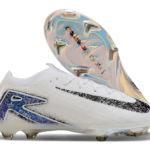
FG vs AG vs SG football boots differ mainly in the surface they are designed to grip. FG boots suit short, firm natural grass; AG boots are purpose-built for modern artificial grass; and SG boots are intended for soft, wet or muddy natural pitches. Choosing by surface—not colour, player position or marketing tier—helps you get predictable traction and avoid unnecessary stud pressure.
Quick answer
- Choose FG for firm, short natural grass that is dry or slightly damp.
- Choose AG for modern 3G or 4G artificial grass.
- Choose SG for soft natural grass where longer studs can enter the ground.
- If you play on several surfaces, check whether a manufacturer-approved MG soleplate covers them.
FG vs AG vs SG football boots: quick comparison
| Soleplate | Best surface | Typical stud approach | Avoid using on |
|---|---|---|---|
| FG | Firm natural grass | Moulded conical, chevron or bladed studs | Deep mud and hard indoor surfaces |
| AG | 3G and 4G artificial grass | More numerous, shorter studs designed to spread pressure | Soft, muddy natural grass |
| SG | Wet, soft natural grass | Longer, often removable or mixed studs | Artificial grass, turf and hard ground |
This table is a starting point. Soleplate labels and stud layouts vary by brand and generation, so always check the individual product description and the rules of the venue where you play.
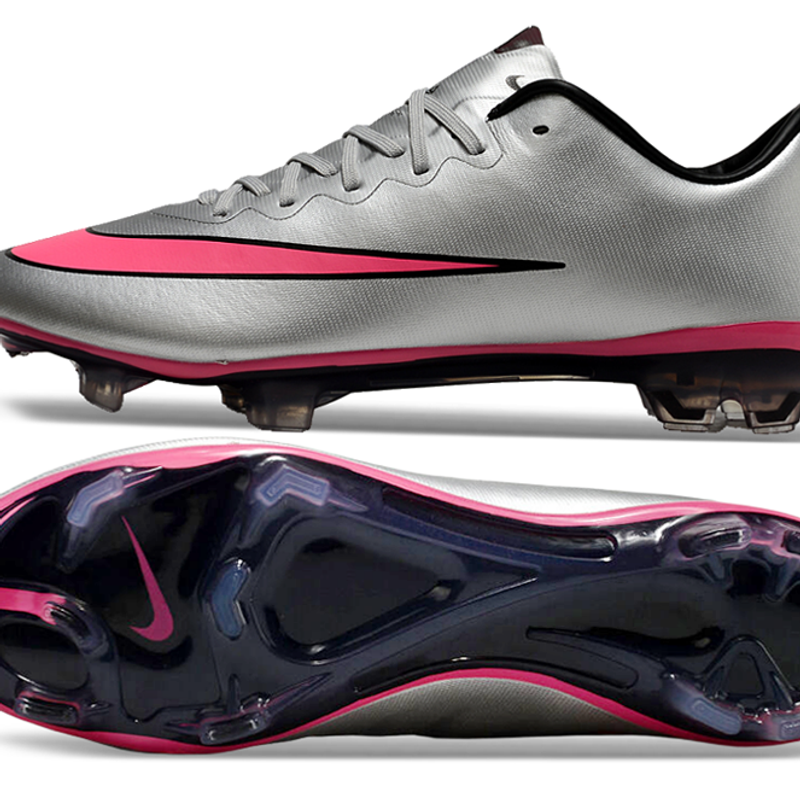
What are FG football boots?
Firm-ground football boots are made for natural grass that is short, firm and reasonably dry. The studs are long enough to enter the top layer of grass and soil, but not as long as a traditional soft-ground stud. FG is the most common option because many maintained outdoor pitches fall into this middle range.
Nike’s official football footwear guide describes firm ground as natural grass kept short and dry or slightly damp, but not muddy. Some brands also approve particular FG or FG/MG models for selected artificial surfaces. That does not mean every FG boot should automatically be used on every artificial pitch.
Choose FG when:
- The studs can enter the grass without sinking deeply.
- The pitch is natural rather than carpet-like artificial turf.
- The ground is dry, firm or only slightly damp.
- Your league or venue permits the specific stud layout.
Browse the store’s firm-ground football boots if this describes your regular pitch.
What are AG football boots?
Artificial-ground football boots are designed for synthetic pitches such as modern 3G and 4G surfaces. Compared with many FG plates, AG layouts commonly use more studs with a shorter profile. The aim is to distribute contact across the sole and provide suitable release during turns on a consistent artificial surface.
Artificial pitches differ. A long-pile 3G field is not the same as an older, short and abrasive astro-turf court. Older carpet-like surfaces may call for TF turf shoes with many small rubber lugs rather than AG studs. The Football Association publishes venue footwear guidance for 3G pitches, and individual facilities may prohibit metal studs or blades.
Choose AG when:
- You mainly play on long-pile 3G or 4G artificial grass.
- The venue specifically recommends moulded artificial-ground studs.
- You want a soleplate designed for consistent synthetic turf.
- Your current FG studs feel too aggressive or create obvious pressure points on the surface.
See the available artificial-ground football boots. Because AG stock is currently limited, check the product label carefully before ordering.
What are SG football boots?
Soft-ground football boots are intended for wet, loose or muddy natural grass. Their longer studs can penetrate softer soil to create traction where short moulded studs may clog or slide. Many SG designs use removable metal-tipped studs or a mixed arrangement, although the exact setup varies.
SG is a specialist option, not a universal upgrade. On a hard pitch, long studs may not enter the ground properly and can feel uncomfortable underfoot. They are also unsuitable for artificial grass unless a venue and manufacturer explicitly say otherwise.
Choose SG when:
- The natural-grass pitch is wet enough for studs to sink into the soil.
- Mud causes shorter studs to lose traction.
- Your competition permits the stud material and configuration.
- You can inspect and tighten removable studs before play.
For wet natural pitches, compare the store’s soft-ground football boots, including options such as the Adidas F50 Blackout SG.
How to choose the right football boot soleplate
- Identify the surface: natural grass, modern artificial grass, older turf, indoor court or street.
- Check its condition: firm, slightly damp, wet, muddy, long-pile or short-pile.
- Read the product label: do not judge the soleplate only from a photograph.
- Check venue rules: some facilities prohibit metal studs or particular blade shapes.
- Prioritise fit after surface: once the soleplate is correct, use the football boots size guide to choose a size.
Practical rule: choose the safest specialist plate for the surface you use most often. A visually similar stud pattern is not proof that two boots are intended for the same pitch.
Common soleplate mistakes
Buying SG because the studs look more aggressive
Longer studs only help when the ground is soft enough to accept them. On firm ground, more aggressive does not automatically mean more suitable.
Using one FG pair everywhere without checking approval
Some FG or MG models can cover more than one surface, but others cannot. Check the manufacturer’s label and the pitch operator’s rules rather than assuming.
Confusing AG with old-style turf
AG generally refers to modern artificial grass. Short, hard carpet-style surfaces are commonly better suited to TF turf shoes with many small rubber lugs.
Frequently asked questions
Can you wear FG football boots on artificial grass?
Only when the specific product manufacturer and venue permit it. Some modern FG or FG/MG plates are approved for selected artificial surfaces, while dedicated AG plates are purpose-built for 3G and 4G pitches. Check the model rather than relying on the FG label alone.
Can you wear AG boots on natural grass?
AG boots may not provide the intended penetration on natural grass, especially when the pitch is wet or soft. Use FG for firm natural grass and SG for soft natural grass unless the manufacturer identifies the soleplate as multi-ground.
Are SG studs allowed in every football league?
No. Rules can vary by competition, age group and venue. Referees may inspect studs, and artificial facilities frequently restrict metal. Confirm the local rules before arriving with an SG pair.
What is the best soleplate for 3G football?
A dedicated AG plate or a venue-approved moulded stud pattern is usually the clearest choice for long-pile 3G football turf. Follow the facility’s footwear guide because rules differ between pitches.
Do football boots for different surfaces fit differently?
The upper and shoe last determine most of the fit, but the soleplate can change underfoot feel. Start with the correct surface type, then check heel hold, forefoot width and toe space using the size guide.
Final verdict
In the FG vs AG vs SG football boots decision, the pitch provides the answer: FG for firm natural grass, AG for modern artificial grass and SG for soft, muddy natural grass. Once you know the surface, compare fit and playing preference in the football cleats buying guide, then check how football boots should fit and browse the matching category rather than choosing studs by appearance alone.