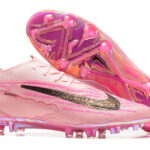
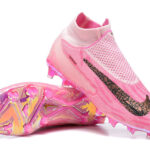
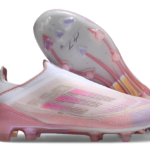
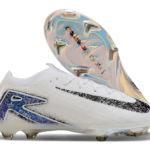
AG football boots are designed for modern long-pile artificial grass, while TF turf shoes are designed for short, hard, carpet-style synthetic surfaces. AG uses distinct moulded studs; TF uses many small rubber lugs. Choose from the pitch depth and the facility’s rules, not from whether both surfaces are casually called “astro.”
AG vs TF: quick answer
- AG: long synthetic fibres, usually with infill and enough depth for purpose-built studs.
- TF: short fibres or carpet-like surface over a firmer base.
- 3G: start with AG or venue-approved MG.
- Old-style astro or cage turf: start with TF if the operator agrees.
- Unknown surface: ask the facility before buying.
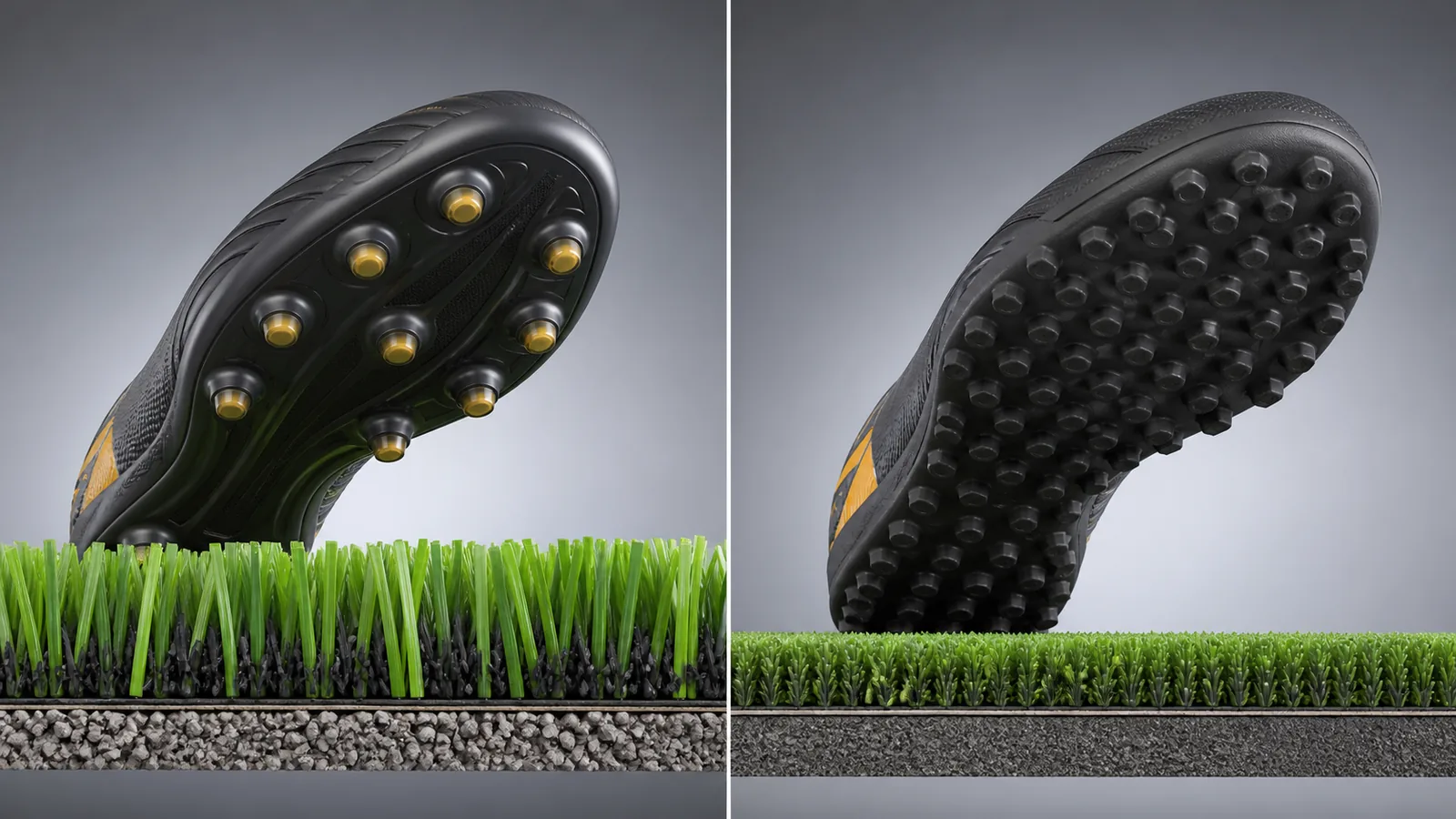
AG vs TF football boots comparison
| Feature | AG football boots | TF turf shoes |
|---|---|---|
| Primary surface | Modern long-pile artificial grass | Short, hard synthetic turf |
| Outsole | Shorter moulded studs in a purpose-built layout | Many small rubber lugs |
| Surface interaction | Studs enter the fibre/infill layer | Lugs create broad contact on the shallow surface |
| Underfoot construction | Football-boot plate | Often more rubber and cushioning |
| Natural grass use | Only if the model lists it | Limited penetration, especially when wet |
| Indoor court use | No | Only if the facility permits; IN/IC is the dedicated option |
What are AG football boots?
Artificial-ground boots use an outsole designed for modern synthetic football turf. Compared with many FG plates, AG patterns commonly use more and shorter studs to spread contact. Stud geometry varies, so the manufacturer’s surface designation is more reliable than a visual count.
FIFA describes 3G turf as a system containing sand and rubber infill. A long-pile pitch gives an AG stud a constructed layer to engage. Read the 3G and 4G artificial-grass boots guide for pitch terminology and MG options.
What are TF turf shoes?
TF shoes replace longer studs with many small rubber lugs for shallow, hard synthetic turf. The larger number of contact points helps create grip and comfort where a stud has little depth to enter. Adidas describes turf shoes as using rubber studs for synthetic turf without damaging the surface.
TF does not mean “all artificial grass.” On a deep, wet long-pile pitch, small lugs may not deliver the intended interaction. Facility guidance remains the deciding factor.
How can you tell whether a pitch needs AG or TF?
- Look at fibre length: long, grass-like fibres point toward AG; a shallow carpet points toward TF.
- Look for infill: visible granules among long fibres are common on 3G systems.
- Press the surface: a shallow hard court offers less stud penetration than a long-pile field.
- Read signs at the venue: many facilities show allowed and prohibited outsole diagrams.
- Ask the operator: use the approved list even when your own visual diagnosis differs.
Is AG better than TF on 3G?
AG is usually the stronger starting point for a long-pile 3G football pitch because it is designed for modern artificial grass. TF may be allowed and can feel comfortable, but its small lugs are principally intended for shallower turf. The correct answer for a particular facility is its footwear policy.
Is TF safer than AG?
Neither outsole is universally safer; safety depends on matching the outsole to the pitch and using equipment in good condition. TF can reduce concentrated stud feel on a hard shallow base. AG can provide more suitable engagement on long-pile artificial grass. Stop if the shoe slips excessively, creates obvious stud pressure or resists rotation unusually.
Which is more comfortable?
TF shoes often include a thicker rubber outsole and can feel more cushioned on hard turf, while AG boots usually feel closer to a standard performance football boot. Comfort also depends on insole, upper, foot width and heel shape. Do not choose TF only for cushioning if the venue requires AG studs.
Can AG or TF be used on natural grass?
Use an AG boot on natural grass only when its official surface range includes it; use TF on grass only when the venue and conditions make its limited penetration appropriate. FG is designed for firm natural grass, and SG is designed for soft natural grass. A TF outsole may slip when a wet grass pitch needs stud penetration.
Buying advice for players who use several pitches
- Mainly 3G: buy AG first.
- Mainly short cage turf: buy TF first.
- 3G and natural grass: use separate AG/FG pairs or an explicitly approved MG model.
- 3G and short turf: separate AG and TF pairs provide the clearest surface match.
- One unknown venue: borrow or wait until the operator confirms its policy.
Frequently asked questions
Can you wear TF shoes on artificial grass?
Yes on short, hard synthetic turf and at facilities that allow them. On long-pile artificial grass, AG or approved MG is usually the better starting point.
Can you wear AG boots on astro turf?
“Astro turf” is ambiguous. If it means modern long-pile artificial grass, AG may be appropriate. If it means a short carpet court, TF is usually the better starting point.
Are turf shoes the same as indoor shoes?
No. TF shoes have small rubber lugs; IN/IC shoes have a flatter non-studded court outsole. Check non-marking rules indoors.
Do professional players use AG boots?
Players can use AG boots when the match is on an artificial surface and the model and competition permit them. Professional status does not change surface compatibility.
Sources and next step
Reviewed July 27, 2026 using the adidas soccer-cleat surface guide, the adidas turf footwear explanation and the FIFA Quality Programme for Football Turf. Return to the complete football boot soleplate guide or browse artificial-ground boots.