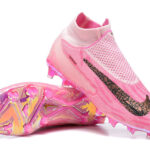
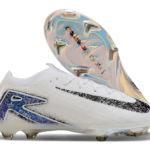
The best football boot model is the one that fits your foot, matches your surface and gives you the ball feel you prefer. In 2026, Nike positions Mercurial for speed, Phantom for precision and Tiempo for comfort and touch; adidas positions F50 for speed, Predator for accuracy and Copa for classic comfort. Those labels are useful starting points, but fit and soleplate suitability matter more than a marketing category.
Quick decision
- Light, close speed-boot feel: compare Nike Mercurial and adidas F50.
- Textured touch and striking assistance: compare Nike Phantom and adidas Predator.
- Soft, adaptable comfort: compare Nike Tiempo and adidas Copa.
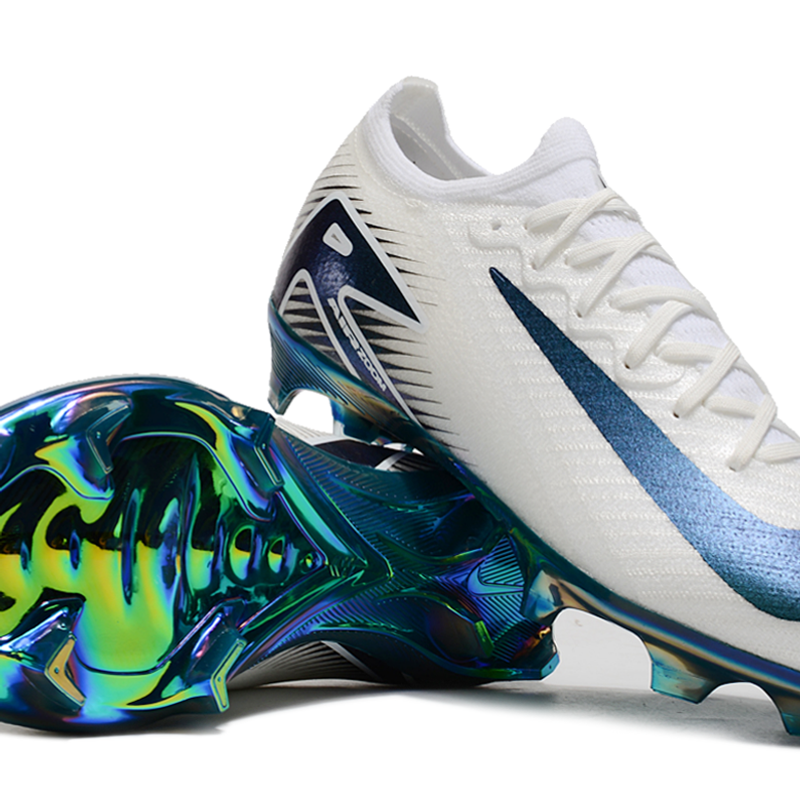
- Within Mercurial: 2026 Superfly 11 targets straight-line acceleration; Vapor 17 targets lightweight, multi-directional movement.
Football boot families compared
| Family | Brand intent | Typical feel | Start here if you want |
|---|---|---|---|
| Nike Mercurial | Speed | Snug, lightweight | Direct acceleration and close fit |
| adidas F50 | Speed | Thin upper, locked-in | Light touch and fast turns |
| Nike Phantom | Precision | Grippy, shaped touch | Passing and striking contact |
| adidas Predator | Accuracy | Textured, stable | Structured contact and stability |
| Nike Tiempo | Touch and comfort | Soft engineered leather | Adaptive feel and cushioning |
| adidas Copa | Classic comfort | Soft, traditional | Leather-like touch and simple feel |
This table describes each brand’s intended design direction, not a guarantee for every tier or generation. Elite, Pro, Academy, League and Club versions can use different materials and plates. Always compare the exact version you plan to buy.
Nike Mercurial vs adidas F50
Mercurial and F50 are the closest direct rivals for players who prefer a lightweight, responsive boot. adidas describes the F50 Elite with a thin Fibertouch upper, Sprintweb texture and Sprintframe 360 outsole. Nike’s 2026 Mercurial range splits into Superfly 11 for explosive forward acceleration and Vapor 17 for low-weight agility.
Choose by foot shape and feel rather than badge. Try both in the same size, wearing match socks, and keep the pair that holds the heel without painful forefoot pressure. Read our detailed Nike Mercurial vs adidas F50 comparison.
Nike Phantom vs adidas Predator
Phantom and Predator are precision-oriented boots, but they create contact differently. Phantom 6 uses Tuned Gripknit and an off-centre lacing area to support close control and a clean striking zone. Predator Elite uses a HybridTouch upper, Strikeskin rubber fins and Controlframe 2.0 to emphasise textured contact and a stable base.
Players who want a tackier, shaped upper may prefer Phantom; players who like a more structured sensation and prominent striking texture may prefer Predator. See the full Phantom vs Predator guide.
Nike Tiempo vs adidas Copa
Tiempo and Copa suit shoppers who prioritise softness, touch and comfort over the most minimal speed-boot sensation. The 2026 Tiempo Maestro uses Nike’s engineered Techleather and a split plate that lets the upper wrap farther around the boot. Copa remains adidas’ heritage-led family, with current models varying by tier and generation.
Neither family is automatically “wide.” The upper may adapt, but the last, heel shape and sole width still determine fit. Compare them in our Tiempo vs Copa guide.
Superfly vs Vapor in 2026
Superfly 11 and Vapor 17 are no longer the same Mercurial with different collars. Nike says the Superfly 11 Elite uses an Air Zoom unit, ZoomX foam and Flyweave Ultra for forward propulsion and containment. Vapor 17 Elite uses Atomknit and the lightweight FlyLite plate for quick cuts. Both are low-cut in the 2026 generation.
Read the technology and use-case breakdown in Superfly 11 vs Vapor 17.
adidas F50 vs Predator
F50 and Predator are adidas’ clearest speed-versus-control comparison. F50 Elite uses a thin Fibertouch upper, Sprintweb texture and Sprintframe 360 for light, direct movement. Predator Elite uses HybridTouch, Strikeskin fins and Controlframe 2.0 for structured contact and stability.
Read the full adidas F50 vs Predator comparison to choose by upper feel, fit, closure, tier and surface.
How to compare any two football boots
- Match the soleplate to the pitch. An ideal upper on the wrong surface is still the wrong boot. Use our FG, AG, SG, MG, TF and IN guide.
- Compare the exact tier. Elite-to-Elite is meaningful; Elite-to-Academy mixes construction and price differences.
- Check heel lock. Your heel should stay secure during acceleration without rubbing.
- Check forefoot pressure. Snug is acceptable; numbness, burning or toe curl is not.
- Keep surface and size constant. Do not let a different soleplate or wrong size distort the comparison.
Our recommendation framework
Use a three-stage filter: surface first, fit second, feel third. After those are correct, price and appearance can decide between two technically suitable pairs. No boot creates speed or accuracy by itself; it can only provide a platform that suits your movement and ball-contact preferences.
Compare performance tiers, not only model names
A family name does not describe every product in that family. Nike Elite, Pro, Academy and Club boots step down through different upper materials, plate construction and finishing. adidas Elite, Pro, League and Club versions follow a similar price ladder. An Academy Mercurial can feel more padded than an Elite Mercurial, while an F50 League may not reproduce the thin upper or plate response described for F50 Elite.
Before comparing, record the full name: family, generation, tier, closure and soleplate. “Phantom vs Predator” is a useful topic; “Phantom 6 Elite Low AG vs Predator Elite Laced AG” is a purchase-ready comparison.
Fit clues by family
Brand intent provides clues, not measurements. Nike describes Mercurial as snug and its current Phantom and Tiempo as more natural-fitting choices. Soft Tiempo or Copa uppers may adapt around the forefoot, but the outsole cannot stretch. Predator closure options can change instep pressure; laceless construction relies more heavily on the shape of the knit opening. F50 commonly targets a locked-in speed feel.
Test late in the day when feet are slightly larger. Wear your match socks and any grip socks, then perform controlled stops and lateral movements indoors. Keep the pair only if the heel stays down, toes remain flat and the forefoot feels secure without numbness.
Price-to-performance decision
Elite boots deliver each brand’s headline materials, but they are not automatically the best value. A lower tier can be more durable, more padded and easier to replace. Pay for Elite when you specifically value the lighter upper or advanced plate and can accept the price and potential durability trade-off. For training volume, many players are better served by a mid-tier model in the correct size and surface.
Comparison mistakes to avoid
- Comparing a new generation with an old review without checking the model number.
- Assuming every professional uses the retail construction sold under the same name.
- Choosing an FG plate for artificial grass because the colourway is unavailable in AG.
- Sizing up to solve a narrow fit, which can create heel slip and toe movement.
- Treating “control,” “speed” or “precision” as a performance guarantee.
Nike vs adidas: what is genuinely different?
Both brands cover speed, precision and comfort, so there is no clean brand-wide winner. Nike’s 2026 lineup makes the playing-style split explicit across Mercurial, Phantom and Tiempo. adidas presents F50, Predator and Copa as parallel choices. The meaningful differences appear in the exact upper, closure, plate and last—not in the logo.
Nike’s current Elite flagships use named materials such as Atomknit, Flyweave Ultra, Tuned Gripknit and Techleather. adidas uses Fibertouch, HybridTouch, Strikeskin and its Copa constructions. These names describe design systems, but they do not tell you whether the heel shape matches your foot. Treat technology as a reason to try a pair, not a substitute for trying it.
Model selection by match action
| Frequent action | First comparison | Reason |
|---|---|---|
| Long sprint into space | Superfly vs F50 | Propulsion and speed focus |
| Cutting in tight areas | Vapor vs F50 | Low-weight agility focus |
| Receiving and striking under pressure | Phantom vs Predator | Grippy or textured contact |
| Controlling tempo with soft touch | Tiempo vs Copa | Adaptive, cushioned feel |
| Mixed role and uncertain preference | Try one from each category | Discover preferred touch before buying |
When not to follow the comparison winner
Ignore our style recommendation if the winning boot does not fit or is unavailable in the correct soleplate. A player on artificial grass should not switch to FG just to obtain a preferred colour. A wide-footed player should not tolerate numbness because a speed model scored well. The best technical match becomes a poor purchase as soon as surface or fit fails.
Editorial method and update policy
This guide compares current official brand descriptions, then separates verified design facts from our buying interpretation. We do not claim laboratory performance testing or universal fit measurements. Because generations change, we date sources and revise the guide when Nike or adidas replaces a flagship model. Readers can request a correction through our editorial policy.
Frequently asked questions
Are Nike or adidas football boots better?
Neither brand is universally better. Both make different families, tiers and soleplates; the better choice is the exact boot that fits your foot and pitch while providing your preferred touch.
Should I choose boots by playing position?
Position is a useful shortcut, not a rule. A centre-back may prefer a speed boot and a winger may prefer a soft control boot; foot fit, surface and movement style are stronger filters.
Can I compare Elite and Academy boots directly?
You can compare their purpose, but materials and plates may differ substantially. For a fair performance comparison, compare the same tier and the same soleplate.
Which football boots are best for wide feet?
There is no universal wide model across every generation. Start with our wide-feet fit guide, then test the exact size and version.
Official sources
- Nike: Mercurial, Phantom and Tiempo compared (updated June 5, 2026)
- Nike: Superfly 11 and Vapor 17 technology (updated May 26, 2026)
- adidas: fit, features and field-surface buying guide