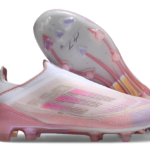
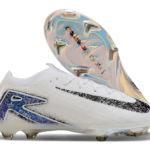
FG football boots are designed primarily for firm natural grass, while MG football boots are model-specific multi-ground options intended for more than one manufacturer-approved surface. FG usually provides deeper, more aggressive penetration into soil. MG commonly uses a more distributed moulded-stud layout to balance traction across compatible natural and artificial pitches.
FG vs MG: quick answer
- FG means firm ground: short, firm natural-grass pitches that accept moulded studs.
- MG means multi-ground: more than one named surface, commonly a combination of firm natural grass and suitable artificial grass.
- Choose FG when almost all play is on appropriate natural grass and you want a specialised plate.
- Choose MG when the exact product is approved for the regular surfaces you use.
- MG is not universal: it does not automatically replace SG, TF or indoor footwear.
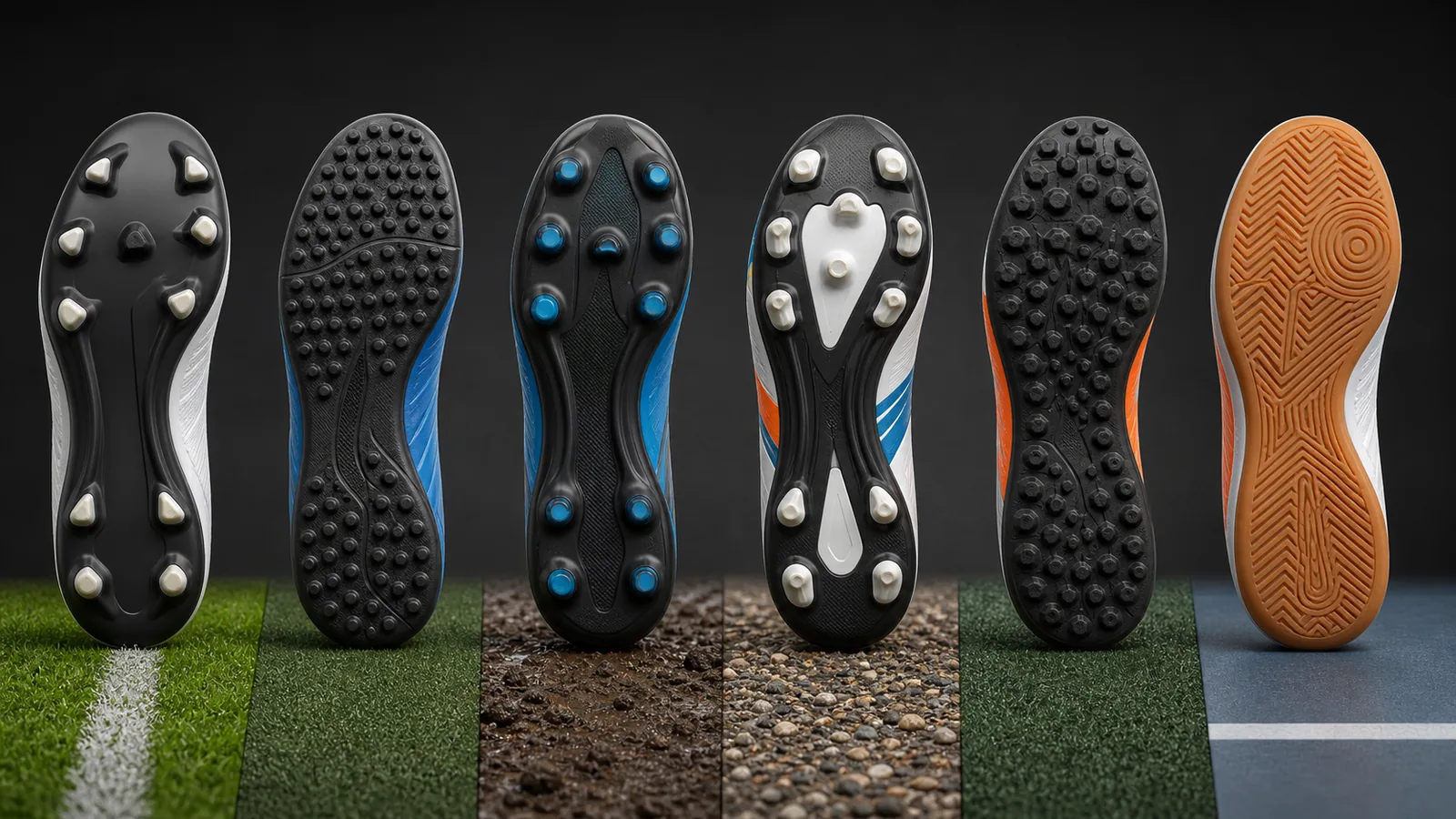
FG vs MG comparison table
| Feature | FG | MG |
|---|---|---|
| Meaning | Firm ground | Multi-ground |
| Primary role | Firm natural grass | Multiple specifically approved surfaces |
| Stud pattern | Often fewer or more aggressive moulded studs | Often more distributed and moderate |
| Main strength | Specialised natural-grass traction | Versatility across a mixed schedule |
| Main limitation | May not be approved for artificial grass | Can feel less specialised on one surface |
| Does it cover SG or TF? | No | Not automatically |
What does FG mean in football boots?
FG means firm ground and refers to a soleplate built for appropriate firm natural grass. The surface should have enough soil for the studs to enter but should not be so soft that deeper SG traction is required. Dry or slightly damp grass can be suitable; hard, baked or synthetic surfaces require a different check.
FG is one of the most common retail plates, but “common” does not mean universal. Using a standard FG pattern on artificial grass should happen only when the exact manufacturer and venue permit it. Read Can You Wear FG Boots on Artificial Grass?.
What does MG mean in football boots?
MG means multi-ground and describes a soleplate designed for the surfaces listed by that manufacturer for that product. adidas’ current buying guide says MG incorporates elements for movement between natural and artificial surfaces. Other brands may use FG/MG or similar combined wording.
The approval belongs to the exact boot, not to the letters in isolation. Check the product page, outsole label and venue policy. An MG plate does not automatically make a boot suitable for soft muddy grass, short carpet turf or indoor courts.
How do FG and MG studs differ?
FG usually seeks stronger soil penetration, while MG generally spreads load through a less aggressive layout. Exact stud counts and shapes vary. Conical, bladed and mixed geometries cannot be judged safely from a simple category label.
More studs can distribute pressure, but stud count alone is not proof of AG suitability. Manufacturers design the complete plate—including stud length, flex and geometry—as a system.
Is MG safer than FG on artificial grass?
An MG boot can be the safer choice only when the exact model is approved for that artificial surface and the venue allows it. Dedicated AG remains the clearest specialist option for modern long-pile artificial grass. MG is a compromise for mixed use, not a universal replacement for AG.
Pitch construction varies. A short, hard, carpet-style synthetic surface is normally a TF use case, not an AG or MG assumption. Compare AG vs TF football boots.
Which lasts longer: FG or MG?
Durability depends more on compatible use, frequency and construction than on the two-letter label. An FG plate repeatedly used on abrasive artificial grass can wear differently from the same plate on soil. MG may suit a mixed schedule, but it still needs cleaning and gradual drying.
Inspect stud wear, sole separation and heel damage regularly. Replace boots when traction elements are uneven or the soleplate is separating.
Should you choose FG or MG?
- Choose FG if nearly all play is on firm natural grass and the pitch accepts normal moulded studs.
- Choose MG if you rotate between the exact approved natural and artificial surfaces and want one practical pair.
- Choose AG if modern artificial grass is your primary surface.
- Choose TF for short, hard synthetic turf.
- Choose SG when natural grass is soft enough to require deeper penetration and rules permit it.
FG vs MG verdict
FG is the specialist natural-grass choice; MG is the flexible mixed-surface choice. Buy FG for an appropriate firm grass schedule. Buy MG only after confirming that the exact product covers every regular pitch you intend to use. When artificial grass dominates, compare a dedicated AG model instead.
Continue with the complete football boot soleplate guide, browse firm-ground boots, or read about the best boots for 3G and newer artificial grass.
Frequently asked questions
Can MG football boots be used on natural grass?
Yes, when natural grass is included in the exact manufacturer’s approved surfaces and the pitch condition is suitable. MG is not intended to replace SG on very soft ground.
Can MG football boots be used on artificial grass?
Some MG products are approved for compatible artificial grass. Confirm the product and venue; dedicated AG remains the specialist choice when artificial grass is the main surface.
Is FG/MG the same as AG?
No. FG/MG is a combined multi-surface designation, while AG is a dedicated artificial-ground plate. Their studs, flex and intended use can differ.
Are MG boots good for beginners?
MG can be practical for beginners with a mixed schedule, provided every regular surface is explicitly covered. Fit and venue rules still need to be checked.
Sources and review method
Reviewed on August 11, 2026. Surface definitions were checked against the official adidas football boot buying guide. Always follow the exact manufacturer product page and local venue rules.