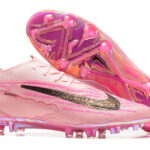
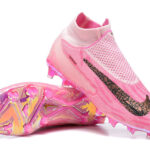
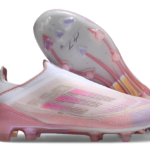
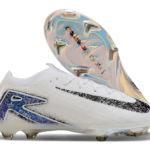
You should wear FG football boots on artificial grass only when the exact boot manufacturer and pitch operator both permit it. A standard FG label means firm natural grass, while a dedicated AG plate is designed for modern artificial grass. Some FG/MG or combined soleplates are approved for both, but the approval belongs to that model—not every boot that looks similar.
Quick answer
- Standard FG: do not assume it is suitable for artificial grass.
- FG/MG or FG/AG: use only on the surfaces named by the manufacturer.
- Dedicated AG: the clearest option for regular long-pile artificial-grass play.
- Short carpet turf: compare TF shoes rather than AG or aggressive FG studs.
- Venue rule: the facility can prohibit a stud type even when a brand permits it.
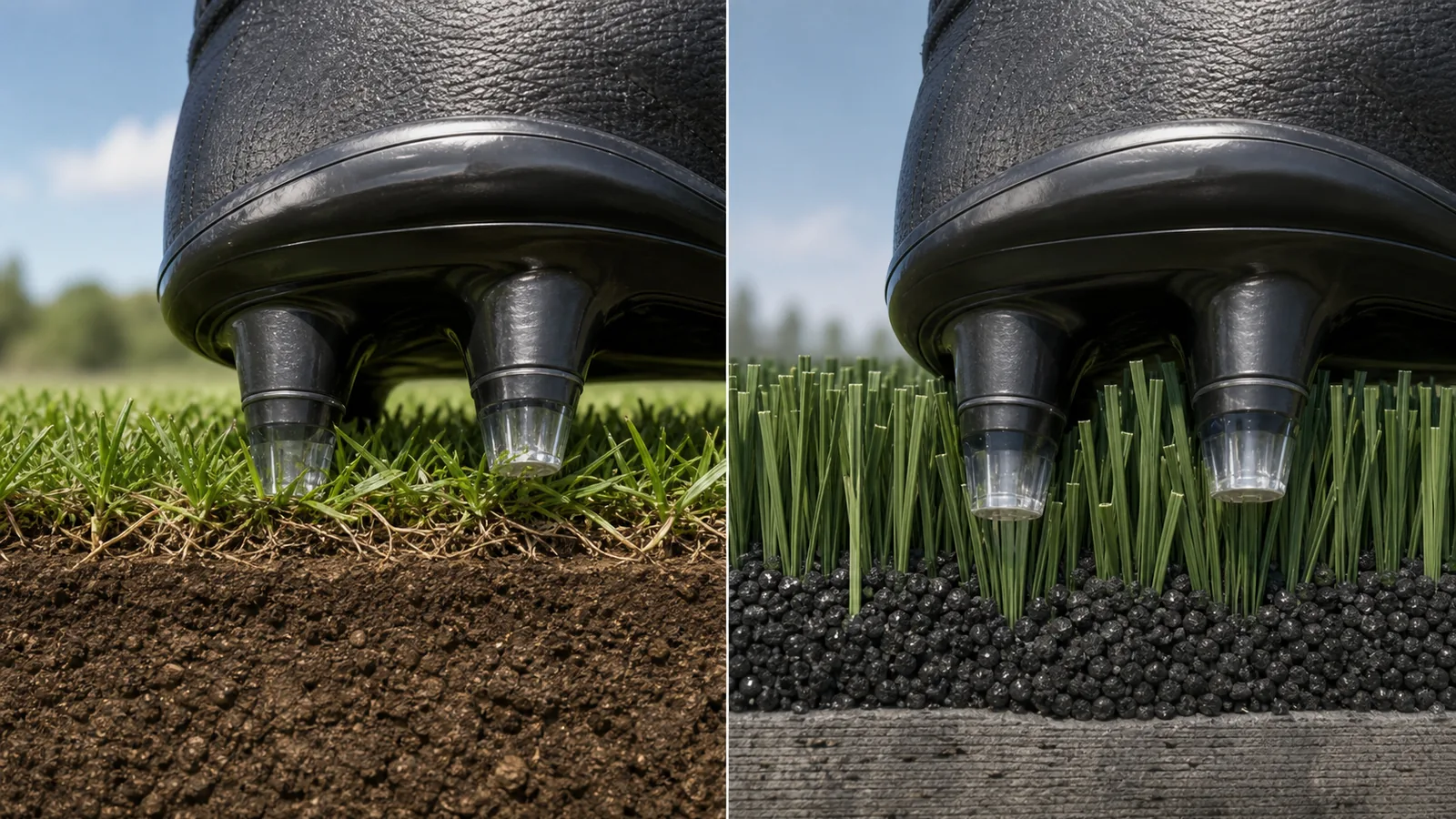
Why is FG on artificial grass a concern?
FG plates are designed around penetration into firm natural grass and soil, while artificial pitches have a constructed surface and base. An aggressive or long FG layout can interact differently with synthetic fibres and infill. The concern is not the two-letter label by itself; it is whether the complete outsole releases, distributes pressure and complies with the pitch rules.
Adidas’ current soccer-cleat guide separates FG for natural grass from AG for artificial grass and notes that AG plates commonly use shorter, more conical studs to distribute weight. It also recognises MG as a separate multi-surface option. This is why a product description matters more than a visual guess.
When can FG football boots be used on artificial grass?
An FG boot can be considered only when its official product guidance includes the artificial surface and the venue accepts the stud layout. Look for explicit wording such as FG/MG, FG/AG, multi-ground or a manufacturer statement naming artificial grass. Do not extend that statement to other generations in the same boot family.
- Find the full product name and stock-keeping code on the box or size label.
- Open the manufacturer’s product page or care/footwear guide.
- Read the “surface,” “ground type” or outsole description.
- Ask the facility which footwear is permitted on its pitch.
- Check league or referee restrictions before a match.
Practical rule: “Moulded studs allowed” is not always the same as “every moulded stud allowed.” Ask whether blades, metal tips or particular stud lengths are restricted.
When should you choose AG instead?
Choose dedicated AG football boots when modern artificial grass is your main training or match surface. The outsole is purpose-built for synthetic football turf, so you avoid relying on an exception attached to a particular FG model. Frequent players may also get more predictable underfoot feel by keeping a separate AG pair.
Browse the store’s artificial-ground football boots and read the 3G and 4G artificial-grass guide before choosing.
Is every artificial pitch the same?
No: long-pile artificial football turf and short carpet-style turf require different footwear decisions. FIFA describes 3G systems as artificial turf with sand and rubber infill. A shallow, abrasive court commonly called “astro” may be better matched to TF shoes with many small rubber lugs.
If the fibres are very short and the surface feels hard underfoot, compare AG vs TF football boots. If the pitch has long fibres and visible infill, ask whether AG or an approved MG soleplate is required.
What can happen if the soleplate is wrong?
- Excessive grip: the outsole may feel reluctant to release during a turn.
- Stud pressure: longer or fewer contact points can feel concentrated on a firm base.
- Poor grip: the wrong plate can also fail to engage the surface.
- Premature wear: the outsole or studs may wear outside their intended environment.
- Rule or warranty conflict: use outside stated conditions may affect facility access or manufacturer coverage.
These outcomes depend on the exact outsole and pitch, so avoid universal injury or durability claims. The correct response is to verify the combination, not to assume every FG plate is dangerous or every combined plate is safe everywhere.
FG, AG and TF decision table for artificial surfaces
| Pitch description | Best starting option | What to verify |
|---|---|---|
| Long-pile synthetic grass with infill | AG or approved MG | Venue footwear list and product label |
| Short, hard carpet-style turf | TF | Lugged shoes permitted; non-marking rule if indoors |
| Unknown artificial pitch | Ask before buying | Fibre length, infill, base and prohibited studs |
| Mixed natural grass and artificial schedule | Separate FG and AG, or explicitly approved MG | Both surfaces named by manufacturer |
Can you use FG boots occasionally on artificial grass?
Frequency does not change the outsole’s approved surface. One session on an unapproved pitch is still outside the stated use. If the exact boot has a combined FG/MG or similar designation and the venue permits it, occasional use may be within its guidance; otherwise choose AG, MG or TF according to the pitch.
How should players with one pair choose?
A one-pair player should choose for the surface used most often, then look for a manufacturer-approved multi-ground model only if the secondary surface is explicitly covered. Do not select SG for versatility, and do not use indoor shoes on grass. Two lower-priced specialist pairs can be more practical than one premium pair used outside its intended conditions.
Frequently asked questions
Can Nike FG boots be used on artificial grass?
Check the exact Nike product. Nike sells dedicated artificial-grass versions of several models as well as multi-ground options at selected tiers. A standard firm-ground name does not automatically include artificial grass.
Can Adidas FG boots be used on 3G?
Only if the exact Adidas product guidance and 3G facility permit it. Adidas separates FG, AG and MG in its buying guide, so use the outsole designation printed for the individual boot.
Are FG/MG boots the same as AG boots?
No. FG/MG is a multi-surface designation; AG is purpose-built for artificial grass. Both may be permitted on some synthetic pitches, but their stud layouts and intended surface range can differ.
Do FG boots wear out faster on artificial grass?
Artificial surfaces can create different abrasion and traction conditions, but durability varies by outsole and pitch. Use only approved surfaces and inspect studs and sole separation regularly rather than relying on a fixed lifespan claim.
Sources and next step
Reviewed July 27, 2026 using the adidas surface guide, the FIFA Quality Programme for Football Turf and IFAB Law 4. For every soleplate option, return to the complete football boot surface guide, then use the football boots buying guide to check fit and width.