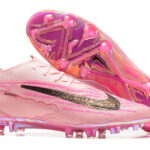
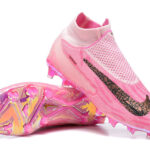
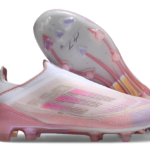
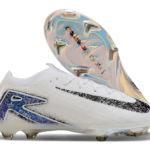
To spot fake football boots, verify the seller and exact product code first, then compare the box label, size label, colourway, materials, construction and soleplate with official information. Never trust one logo, QR code or serial number by itself: counterfeiters can copy visible identifiers.
Quick answer
- Look for several consistent signals, not one “proof”.
- Match the product code and colourway to an official brand listing.
- Compare the box label with both boots, including size and model details.
- Use payment methods with buyer protection and read the return policy before buying.
- If the evidence remains unclear, ask the brand or an authorised retailer.
Counterfeit products can create performance and safety risks as well as financial loss. US Customs and Border Protection advises shoppers to purchase from legitimate sources, be cautious about unusually low prices and examine labels and packaging. See the agency’s Fake Goods, Real Dangers guidance.
Checks 1–4: seller and listing
1. Research the seller, not only the boot
Check how long the shop or marketplace account has operated, whether contact details are complete and whether independent reviews describe the same products. A polished website alone is not evidence. Save the listing, seller name, order confirmation and payment record.
2. Match the exact product code and colourway
Find the style or article code on the box and internal size label. Search that exact code on the brand’s official site or a reputable archive. The model name, generation, colour description and images should agree. A real code printed on the wrong colourway is a warning sign.
3. Treat a dramatic discount as a reason to check more
Old-season boots can be legitimately discounted, so price alone does not prove a fake. However, a newly launched or genuinely limited pair offered by many unknown sellers at a fraction of its normal price needs stronger evidence: original receipt, clear label photos and a credible stock story.
4. Read returns and payment protection before ordering
A clear returns process, working contact route and protected card or marketplace payment reduce risk. Avoid sellers that demand irreversible transfers or refuse to provide basic product photos. A return policy does not authenticate a boot, but the absence of one makes a dispute harder.
Checks 5–10: box, label and construction
5. Compare the box label with both boots
The model, product code, colour, size range and barcode information should be internally consistent. Check that the left and right boot labels describe the same model and size. Packaging can be damaged or replaced during resale, so a mismatched box is a red flag rather than a final verdict.
6. Inspect typography and label quality
Compare the font weight, spacing, spelling and print alignment with confirmed examples of the exact generation. Blurry printing or inconsistent label placement deserves scrutiny. Do not reject a pair solely because its country of manufacture differs from another pair; brands can use multiple factories.
7. Check symmetry, bonding and finish
Place the boots side by side. Compare toe shape, collar height, lace position, logo placement and soleplate alignment. Uneven seams, excessive exposed adhesive, sharp unfinished edges or badly misaligned overlays can indicate poor construction. Minor cosmetic differences can also occur in genuine mass-produced footwear, so combine this check with the others.
8. Compare the upper material and texture
Official photos and descriptions identify whether a model uses a thin synthetic, knitted area, textured strike zone or leather-style upper. Counterfeits may reproduce the colour but not the layer structure, flexibility or texture. Compare the exact model—not a cheaper academy or takedown version that legitimately uses different materials.
9. Inspect the soleplate and stud geometry
Count the studs and compare their shape, position, branding and plate cut-outs with official images. Also confirm the correct surface version: FG, AG and SG variants of one colourway can have different plates. Our FG vs AG vs SG guide shows why this distinction matters.
10. Check the insole and internal structure
Remove the insole if it is designed to come out. Compare its print, foam density and cut with verified examples. Look inside for loose material, exposed sharp edges or weak heel-counter construction. The smell of glue is not a reliable authenticity test; both new genuine and counterfeit footwear can have manufacturing odours.
What does not prove authenticity?
- A scannable QR code: copied codes can lead to real webpages.
- A matching product code: counterfeit labels can copy a genuine code.
- “Made in” wording: the country alone neither proves nor disproves authenticity.
- A receipt image: screenshots and paper records can be reused.
- One social-media video test: bending, weighing or burning materials is not a dependable universal test.
The most defensible conclusion comes from provenance plus multiple consistent product details. When buying a special colour, compare it with our pink and limited-edition boot guide, then confirm the exact style code independently.
What to do if you already bought a suspicious pair
- Do not wear the boots outdoors or remove labels if you may return them.
- Photograph the listing, packaging, labels, both boots and the suspected differences.
- Ask the seller for provenance and a written resolution.
- Contact the marketplace or card provider within its dispute deadline.
- Ask the brand or an authorised retailer whether it offers product verification. Do not assume a warranty decision is an authentication service.
Nike’s official shoe warranty guidance explains that eligible claims depend on purchase details and manufacturing-date rules; a warranty label by itself should not be treated as proof that a resale pair is genuine.
Frequently asked questions
Can a serial number prove football boots are real?
No. A product or serial number is useful only as one cross-check because counterfeiters can copy genuine numbers. Verify the seller, exact colourway, labels and construction together.
Does a QR code prove Nike or adidas boots are authentic?
No. A copied QR code can still open a genuine brand page. It should agree with the exact model and label information, but it is not independent proof.
Are cheap football boots always fake?
No. Older colourways, used boots and takedown models can be cheaper. Compare the exact model tier and release rather than assuming every discount is counterfeit.
Can photos alone confirm authenticity?
Usually not with certainty. Clear photos can reveal inconsistencies, but provenance, purchase records and physical inspection provide stronger evidence.
Final checklist
Start with the seller, match the exact code and colourway, then inspect labels, construction, upper and soleplate. If several details conflict, do not rationalise them away. For fit checks after authenticity concerns are resolved, use our football boot fit guide and size converter.