How should football boots fit? They should feel snug around the heel and midfoot, with no obvious heel lift, while leaving enough room for your toes to lie naturally. The upper can feel close to the foot, but it should not cause numbness, sharp pressure or curled toes. A secure football fit is closer than a casual trainer fit; it is not the same as a painful fit.
Football boot fit checklist
- Heel: secure, without noticeable lifting as you walk.
- Midfoot: held in place, without numbness or excessive lace pressure.
- Forefoot: close but not pinched at the widest point.
- Toes: able to lie flat, without hitting the front.
- Length: minimal unused space, but enough for natural toe position.
Should football boots fit tight?
Football boots should fit snugly, not painfully tight. A snug boot moves with your foot and limits sliding. A boot that is too tight creates concentrated pressure, while a boot that is too loose allows the heel or forefoot to move independently inside the shoe.
| Fit | What it feels like | What to do |
|---|---|---|
| Secure fit | Heel stays down, toes lie flat, upper feels close | Keep checking the fit with match socks and movement |
| Too tight | Sharp pressure, numbness, curled toes, painful side compression | Try a different size, width profile or boot family |
| Too loose | Heel lifts, foot slides, excessive toe space, laces must be overtightened | Try a smaller size or a more suitable shoe shape |
Nike’s official football boot fit guide says a well-fitting boot should generally have no heel movement. It also notes that many players prefer a closer fit than in running shoes. That closer feel should still allow normal circulation and toe position.
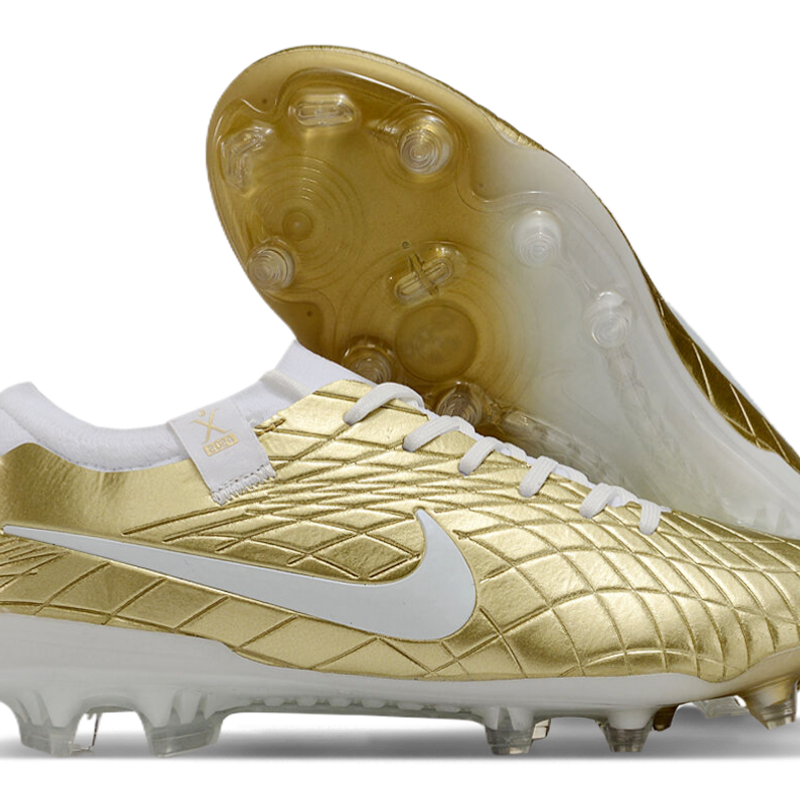
How should football boots fit in each area?
Heel
The heel should sit fully into the back of the boot. Walk several steps and make a slow, controlled change of direction on a clean indoor surface. A small change in material sensation is normal, but obvious repeated lifting means the boot is too loose or the heel shape is not right for you.
Midfoot and instep
The midfoot should feel supported without requiring the laces to be pulled as tight as possible. High-volume feet may feel pressure over the instep even when the length is correct. Laced boots usually offer more adjustment here than laceless designs.
Forefoot
The widest part of your foot should align with the widest part of the boot. The upper may touch the sides, but the foot should not spill dramatically over the soleplate or feel pinched from both directions.
Toe box
Your toes should lie flat rather than curl downward or overlap. The longest toe should not strike the front during a forward step. At the same time, large unused space can reduce the connected feel that football boots are designed to provide.
How to fit football boots in seven steps
- Measure both feet. Stand with weight distributed normally and measure heel to longest toe. Use the larger foot as the starting point.
- Convert the size carefully. EU, UK and US labels are not identical across brands. Use the Cleats Store size guide and confirm the brand chart.
- Wear match socks. The thickness of grip socks and football socks changes the available volume.
- Loosen the boot fully. Do not force the foot through a tight opening, especially with high-sock or laceless designs.
- Set the heel. Tap the heel gently into the back before tightening the laces from the bottom upward.
- Check standing and movement. Walk, rise onto the forefoot and make a controlled lateral step indoors.
- Recheck pressure. Pay attention to the little-toe side, big-toe joint, instep and heel collar.
Important: keep the soles clean and follow the return policy while checking fit. Outdoor wear can make a return or exchange more difficult.
How to measure feet at home
Place paper against a straight wall, stand with your heel lightly touching the wall and mark the end of the longest toe. Measure in centimetres and repeat for the other foot. Adidas provides a similar process in its official shoe measurement guide.
Measure later in the day if possible because feet can feel different after normal activity. Record the measurement rather than relying only on the size printed inside an old pair.
How football boot families fit differently
Two boots in the same labelled size can feel different because of the shoe last, toe shape, upper, lacing and heel construction.
Nike Mercurial
Nike describes Mercurial as contoured and relatively narrow. It suits players who like a close, locked-in sensation. Wider feet may need to compare half sizes, but adding length is not always the right solution.
Nike Phantom
Phantom uses a more natural fit intended to accommodate a broader range of foot shapes. It is a useful comparison for players who find Mercurial restrictive through the forefoot or midfoot.
Nike Tiempo
Tiempo is positioned toward comfort and a natural feel. The exact upper varies by generation and tier, so check the individual product rather than assuming every Tiempo stretches in the same way.
Adidas F50 and Predator
F50 is a speed-boot family offered in laced and laceless forms, while Predator is a control-oriented family with several tongue and closure designs. A laced version gives more control over tension; a laceless upper needs to match your foot volume more precisely. Use the official Adidas footwear size chart when comparing EU, UK and US labels.
For a detailed speed-boot comparison, see Nike Mercurial vs Adidas F50. Players who need more forefoot volume can also consult the guide to the best football boots for wide feet.
Will football boots stretch or break in?
Football boots often soften as the upper flexes, but the amount varies. Natural leather, synthetic leather, knit and thin synthetic materials do not behave identically. A boot should not be purchased with the expectation that severe pressure will disappear.
A reasonable first fit is secure and wearable. Short indoor sessions may help you confirm the shape, but numbness, sharp pain or toes forced out of position indicate a sizing or shape problem rather than a normal break-in sensation.
Laced vs laceless fit
- Laced boots: allow more adjustment across the forefoot and instep.
- Laceless boots: offer a clean upper but rely more heavily on the underlying shape and elastic tension.
- High-sock boots: can feel tighter during entry without necessarily being narrower inside.
- Low-cut boots: are easier to enter but still need secure heel hold.
How should kids’ football boots fit?
Children need enough room for comfort and normal toe position, but buying several sizes too large can cause sliding and reduce stability. Nike notes that a slightly roomier fit may be considered for growing feet. Re-measure regularly rather than expecting one oversized pair to cover a long growth period.
Check the fit with the socks the child will actually wear. Ask about pressure at the toes and sides instead of relying only on “they feel fine,” and look for repeated heel movement during walking.
Common football boot fitting mistakes
- Using casual trainer size without checking the brand conversion.
- Trying boots with thin socks instead of match socks.
- Buying extra length to solve a width problem.
- Assuming painful boots will stretch enough later.
- Overtightening laces to compensate for a loose heel.
- Testing outdoors before confirming the return conditions.
Frequently asked questions
How much space should be in the toe of football boots?
There should be enough space for the toes to lie flat without striking the front, but not so much that the foot slides forward. Exact space varies with toe shape and playing preference, so heel security and natural toe position are better checks than one universal measurement.
Should football boots be the same size as trainers?
Use your trainer size only as a starting point. Football boots often fit more closely, and EU, UK and US conversions differ between brands. Measure your feet and check the exact brand chart.
Is heel slip normal in new football boots?
Obvious repeated heel lifting is not an ideal fit. Check that the heel is fully seated and the laces are adjusted correctly. If movement remains, the size or heel shape may be unsuitable.
Should I size down for a tighter touch?
Recreational players generally do not need to force an ultra-tight professional-style fit. A smaller size is inappropriate if it curls the toes or causes pressure. Secure heel hold and a close upper are more useful than simply choosing the smallest possible label.
How do I know if football boots are too narrow?
Warning signs include sharp pressure along the sides, numbness, a foot visibly overhanging the soleplate or the need to remove the insole to tolerate the boot. Compare a naturally shaped family instead of only adding length.
Final fit check
So, how should football boots fit? Secure at the heel, supported through the midfoot, close at the forefoot and comfortable enough for the toes to remain natural. Measure both feet, wear match socks and test indoors. Once the size feels correct, use the football cleats buying guide to choose the right surface and playing style.